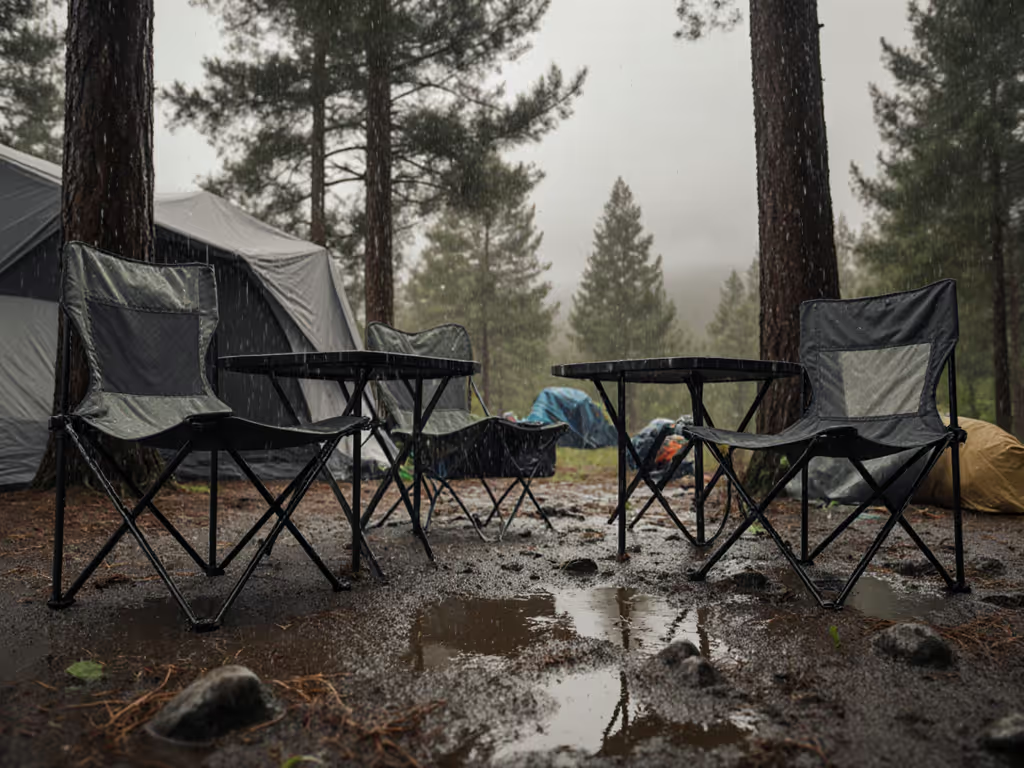
Minimalist Stools vs Chairs: Postural Stability Tested
By Diego Matsuura • 9th Jan
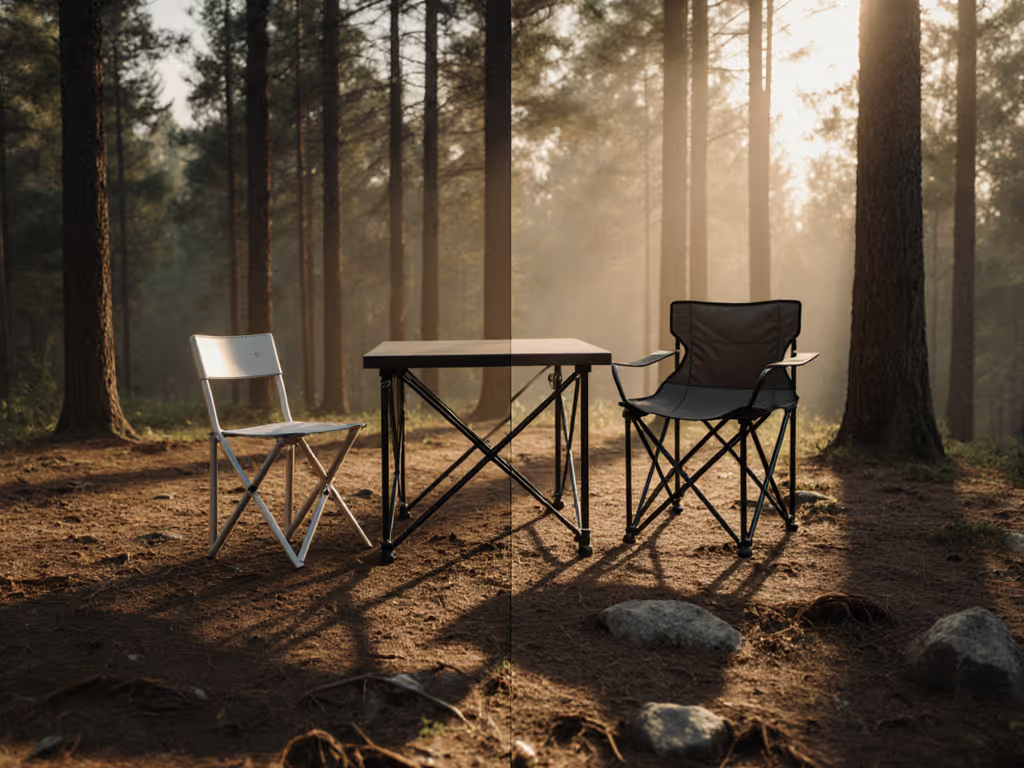
When your camp stools comparison reveals mismatched seating heights, geometry becomes everything. Forget plush cushions for a moment. Minimalist camping seating fails or succeeds based on angles your body feels before you even register discomfort. That wobble on sandy terrain? The stiff shoulders mid-meal? All stem from unmeasured heights silently rebelling against human posture. I've seen groups unravel over mismatched seats while sharing stories under the stars. Comfort isn't about padding, it's about precision. See how chair geometry beats cushions in real camp setups.
Why Your Group Keeps Standing Up Mid-Meal
Picture this: your crew's huddled at the table, plates in hand, but everyone's shifting weight or leaning forward. No one says it hurts, they just can't settle. That's your first clue: ultralight stool vs chair choices impact posture before hunger does. During a beach camp years ago, my dad stood up repeatedly during meals. For coastal trips, pick from our rust-resistant beach chairs tested to stay stable on soft sand. Not by choice. His chair sank 4 inches into soft sand while the table stayed rigidly high. His shoulders hunched at 35 degrees, knees jammed under the table. We fixed it by lowering the table height and adding wider feet to the stool base. He stayed for dessert. Comfort is geometry working quietly in your favor.
The Hidden Physics of Camp Seating
Your body registers mismatched seating in three measurable ways:
- Shoulder elevation: More than 10 degrees of upward tilt = tension fatigue within 20 minutes
- Knee clearance: Less than 2 inches below table edge = restricted blood flow, shifting posture
- Hip angle: Shallower than 90 degrees = lumbar strain (common in low stools)
Most portable chairs sit between 16-18 inches off the ground. Stools often run 12-14 inches. Standard camp tables? Usually 24-26 inches. Find height-fit options in our ergonomic camping tables guide. That gap forces campers into a perch-and-hover stance (especially painful for taller folks or those with stiff joints). Terrain stability comparison isn't just about legs sinking; it's about how sinking changes those critical angles.
Step 1: Measure Your Group's Postural Baseline
Don't guess what works. Quantify it:
- Find your sweet spot: Sit at home dining table. Measure:
- Seat height where thighs slope gently downward (no pressure behind knees)
- Table height where elbows rest at 90 degrees when hands are flat
- Pro tip: This varies by age. Seniors/kids often need 1-2" higher seats for ease of standing.
- Document your group's range:
- Tallest member's seated eye height (to avoid blocked views)
- Shortest member's feet clearance (dangling feet = instability)
- Real example: My family group spans 5'2" to 6'4". Our table must clear 22" for the tall camper's knees while offering 18" seat height for the short camper's feet.
This isn't just comfort. It's safety. A good pack size analysis means nothing if your gear forces unsafe movements at camp.
Step 2: Match Gear to Measured Angles (Not Just Weight)
Here's where most camp stools comparison guides fail: focusing on ounces while ignoring inches. Let's dissect real-world geometry:
Stool Geometry: The Low-Profile Tradeoff
- Seat height range: 12-16" (most ultralight stools sit at 14")
- Pros: Fits under lower tables; better stability on hard surfaces due to lower center of gravity
- Cons: Forces knees above hip line on standard tables (creates 110°+ hip angle = knee strain)
- Terrain reality: Narrow feet sink 2-3x faster than chairs on sand/mud, worsening the height mismatch
Verdict: Only choose stools if your table is ≤22" high. For beach or desert? Demand stability comparison data: foot surface area per pound. (Example: A 0.4lb stool with 4"x4" feet has 1 sq in/lb, a sinking hazard. You want ≥2 sq in/lb.)
Chair Geometry: Back Support vs. Height Mismatch
- Seat height range: 16-20" (most sit at 17-18")
- Pros: Aligns with standard tables; backrests reduce shoulder strain by 25°
- Cons: Bulkier frames may elevate seat too high for shorter campers (feet dangle = instability)
- Critical note: Many "low-slung" chairs still sit at 18" (too high for 24" tables). Measure your model.
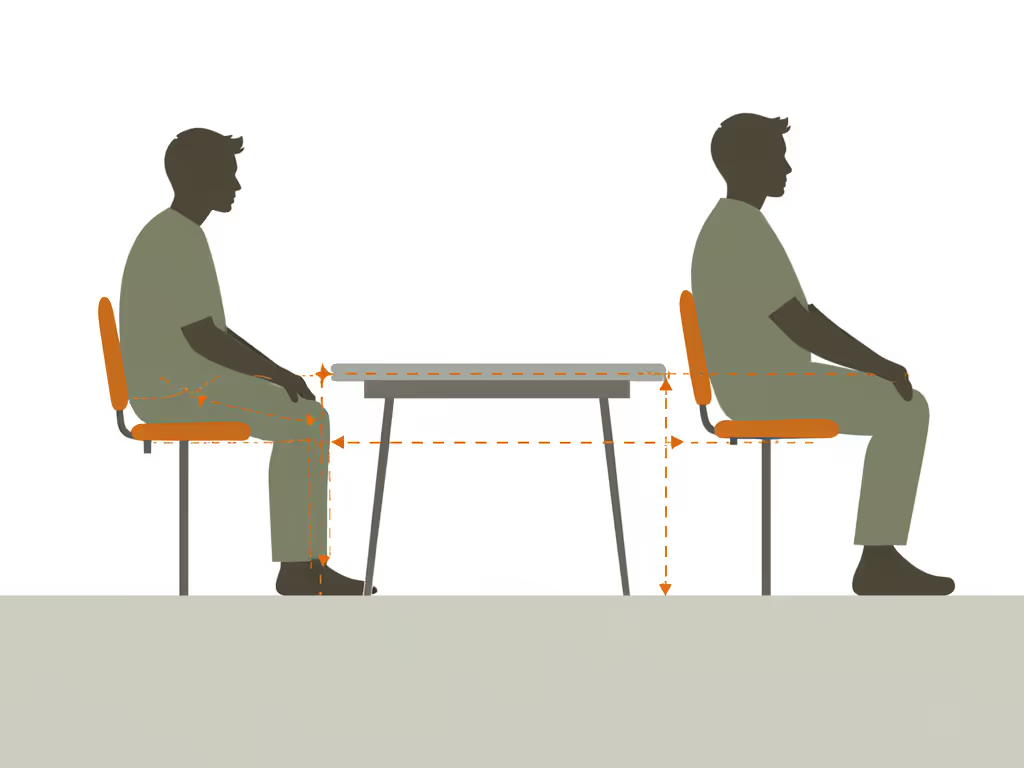
Verdict: Chairs win for seated meals only if seat height is 10-12" below table height. Otherwise, that backrest just anchors you into discomfort. Comfort tradeoffs here are non-negotiable: no backrest beats perfect height alignment.
Step 3: Stabilize Your Terrain, Not Just Your Seat
Uneven ground amplifies every millimeter of height error. Test stability like this:
Sand/Soft Soil: The Sinker Test
- Place stool/chair on loose sand. Step on seat gently (simulate weight).
- Pass: Sinks ≤1" in 10 seconds
- Fail: Sinks >2" or tilts. Fix: Add sand plates (e.g., 6"x6" plastic discs) under legs.
Rock/Roots: The Wobble Assessment
- Set up on uneven terrain. Sit fully. Have partner nudge table.
- Pass: Table wobbles <0.5" before stabilizing
- Fail: Wobble persists or legs lift. Fix: Use adjustable leg ferrules (found on some high-end chairs).
Remember: A stool's low height seems stable until it sinks. Then your "stable" seat becomes a 15-degree tilt. Terrain stability comparison requires dynamic testing, not just static weights. See our head-to-head table wobble results in stability-tested folding tables.
Step 4: Scale Your Setup for Mixed Groups
Kids, grandparents, and teens rarely share ideal heights. Do this:
- For stools: Stack two inverted bowls (1.5" height) under seat fabric. Adds 3" height without bulk.
- For chairs: Place 1" foam pads under short campers' feet. Prevents dangling.
- Pro move: Use one adjustable-height table (like a clip-top model). Raise/lower 4" for different groups.
Real fix: At a festival, I saw a group mix stools and chairs around one table. The stools held cooler lids as footrests for taller campers. Suddenly, minimalist camping seating worked for everyone. Scalability beats uniformity.

The Verdict: Your Geometry Checklist
Before buying, test these measurements, not marketing claims:
-
Seat-to-table drop: Must be 10-12" (measured from seat fabric to table surface)
-
Knee clearance: ≥2" under table edge when seated
-
Foot stability: All feet must sit flat on your typical terrain (sand, rock, grass)
-
Rise height: For older campers, seat should be ≥18" for easy standing
Most ultralight chairs prioritize weight savings over these metrics. Compare what you gain and lose in our ultralight camp chairs guide. Many stools ignore anthropometry entirely. Comfort tradeoffs become glaring when your group's elbows hover 6" below the table, and no cushion fixes that. I've learned this through spilled coffee and stiff shoulders: seat-to-table fit matters more than ounces saved.
Your Action Plan Tonight
Don't wait for your next trip to discover mismatched seating. In 5 minutes:
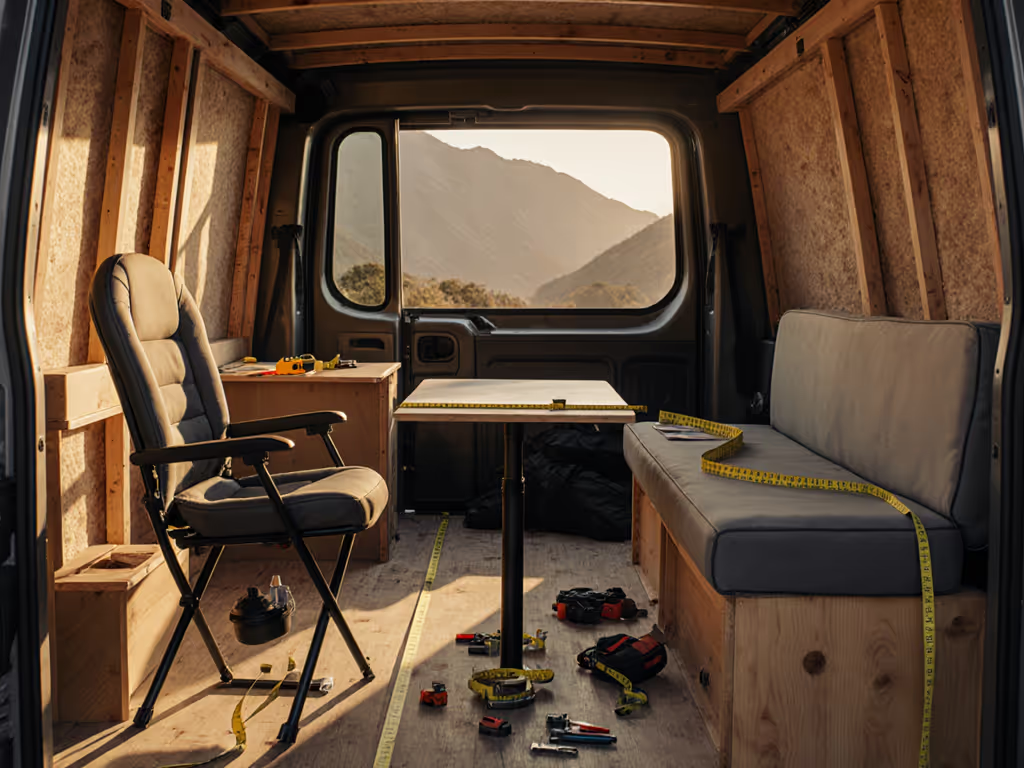
- Measure your current table height (floor to surface)
- Measure your preferred chair/stool seat height (floor to fabric)
- Calculate the gap: Table height - Seat height = Your stability margin
- If gap <10" or >12": You're forcing postural strain
Fix mismatched gear now. Tape sand plates to stool legs. Stack bowls under seats. Return that 14" stool if your table's 26" high. Your group's ability to linger over stories, and stay for dessert, depends on angles you can measure tonight. Because when geometry works quietly in your favor, no one stands up mid-meal wondering why.