Height-Adjust Kids Camping Chairs as They Grow
By Diego Matsuura • 2nd Dec

Remember that frustration when your child outgrows a camping chair just as they're finally old enough to sit through a meal? That's where modern camping chairs with thoughtful kids camping furniture modifications become essential gear. Too many families face mismatched seating where wobbly chairs force children into awkward positions that make them fidget and stand (a scene that disrupts connection and creates unnecessary tension around camp). Comfort is geometry working quietly in your favor, not just cushioning or clever colors. When your child's seat height matches their developing body and aligns with your table, you transform frustration into focused family time.
Why Height-Adjustable Seating Matters for Growing Children
Picture your ten-year-old trying to sit through dinner in a chair built for their six-year-old self. Their feet dangle, knees angle sharply upward, and their posture collapses as they strain to reach the table. This isn't just "kids being kids," it's poor geometry creating measurable discomfort. At this age, children typically need seat heights between 10-15 inches to maintain that essential 90-degree knee angle when seated. Without it, they compensate by slouching, crossing legs, or standing, breaking the mealtime rhythm that builds connection.
During a beach camping trip years ago, my dad kept standing mid-meal until we realized his chair had sunk into the sand while the table remained too high. We didn't add cushioning, instead we lowered the table and adjusted the chair height. Suddenly, he stayed for dessert and stories. That's the power of geometry over gimmicks.
The Geometry Problem: Mismatched Heights and Their Impact
Comfort is geometry working quietly in your favor.
When chair and table heights don't align, you create what ergonomists call "postural stress zones": areas where the body must work against itself. For children, these zones appear at the knees (if too high off the ground), lumbar spine (if leaning forward), and shoulders (if reaching upward). Here's what proper geometry looks like across ages:
- Ages 4-6: Seat height 8-10 inches, table height 18-20 inches
- Ages 7-9: Seat height 11-13 inches, table height 21-23 inches
- Ages 10-12: Seat height 14-16 inches, table height 24-26 inches
These measurements aren't arbitrary, because they're based on average proportion between seated height and reach. When your child's forearm forms a 90-110 degree angle with their upper arm while seated, they can eat comfortably without hunching or stretching. The moment this angle falls outside that range, you'll notice fidgeting, complaints, or them standing to eat.
Step-by-Step Guide to Chair Height Modifications
You don't need to replace your entire car camping gear setup every time your child grows. With simple growing child furniture adaptations, you can extend the life of quality furniture while maintaining proper ergonomics:
1. Identify Your Current Chair's Adjustment Range
Measure your existing chair's seat height from ground to fabric at its lowest and highest settings. Most quality youth chairs offer 2-4 inches of adjustment (often not enough for rapid growth spurts). Note where your child falls within this range: if they're at the top limit, it's time for modification.
2. Add Height Through Stable Extensions (Not Cushions)
Forget stacking pillows, it just creates instability. Instead:
- Cut PVC pipe sections matching your chair leg diameter (typically ¾-1 inch)
- Measure needed height increase (usually 1-3 inches per growth stage)
- Insert pipe sections between chair leg and footplate, securing with epoxy
- Test stability on uneven surfaces before trusting it for long-sit comfort
Many parents successfully use tennis balls sliced horizontally as stable foot extensions that prevent sinking on soft ground (just large enough to distribute weight without adding height). For diagnosing wobble and keeping joints smooth, see our camping chair maintenance guide.
3. Pair with an Adjustable Table
Your height adjustable table needs to move in sync with chair modifications. Some tables offer 2-3 inch leg adjustments, perfect for keeping pace with chair modifications. Measure your dining setup: when seated properly, your child's elbows should rest naturally on the table surface with upper arms vertical. If they're reaching upward or hunching downward, adjust your table height accordingly. Our ergonomic camping tables guide explains leg mechanisms and height ranges that keep kids' elbows in the comfort zone.
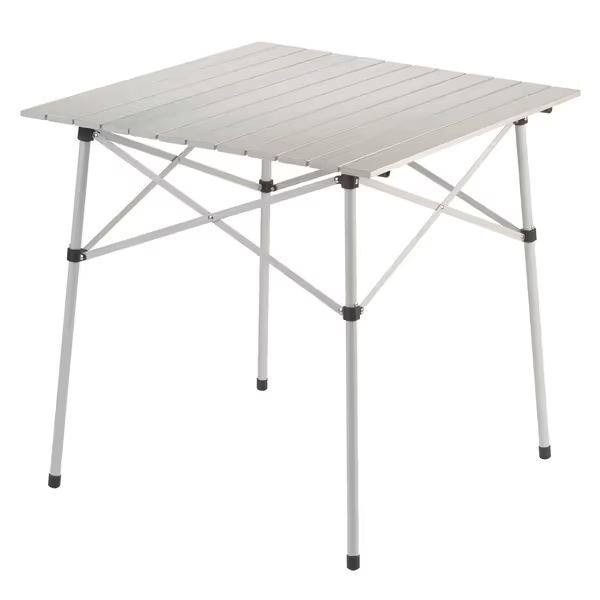
Coleman Outdoor Folding Table
Sturdy, compact table for 4, sets up fast, packs small.
$56.04
Dimensions27 x 27 x 27 inches
Dimensions27 x 27 x 27 inches
Pros
Quick snap-together setup & breakdown
Heavy-duty steel frame, holds up to 30 lbs
Cons
Comfortably seats 2, not ideal for 4 adults
Customers find this camping table easy to set up and break down, praising its sturdy construction that can hold up to 30 lbs of weight, including portable gas grills. The table is perfect for outdoor events and camping trips, with a size that accommodates Coleman stoves and two people comfortably. Customers appreciate its compact folding design and convenient carrying bag, making it easy to transport and store.
Customers find this camping table easy to set up and break down, praising its sturdy construction that can hold up to 30 lbs of weight, including portable gas grills. The table is perfect for outdoor events and camping trips, with a size that accommodates Coleman stoves and two people comfortably. Customers appreciate its compact folding design and convenient carrying bag, making it easy to transport and store.
Creating a Cohesive Seating System for Your Family
The goal isn't just individual chair adjustments, it is creating a connected system where all seating elements work together. Explore our family camp furniture picks for group seating sets with kid-friendly heights. In my assessments of best camp furniture setups, the most successful families establish what I call "comfort zones" with consistent height ranges:
- Dining Zone: Chair seats 12-16 inches, table top 22-26 inches
- Lounge Zone: Chair seats 16-18 inches, side table 18-20 inches
- Craft Zone: Chair seats 10-12 inches, table top 18-20 inches
Transitioning between zones becomes intuitive when heights match expected activities. Recently, I observed a family using this system during a three-day beach trip. The parents adjusted chair heights each morning as their kids grew visibly over the weekend, they had built growing child furniture adaptations that evolved with their children's bodies throughout the trip.
Practical Implementation Timeline
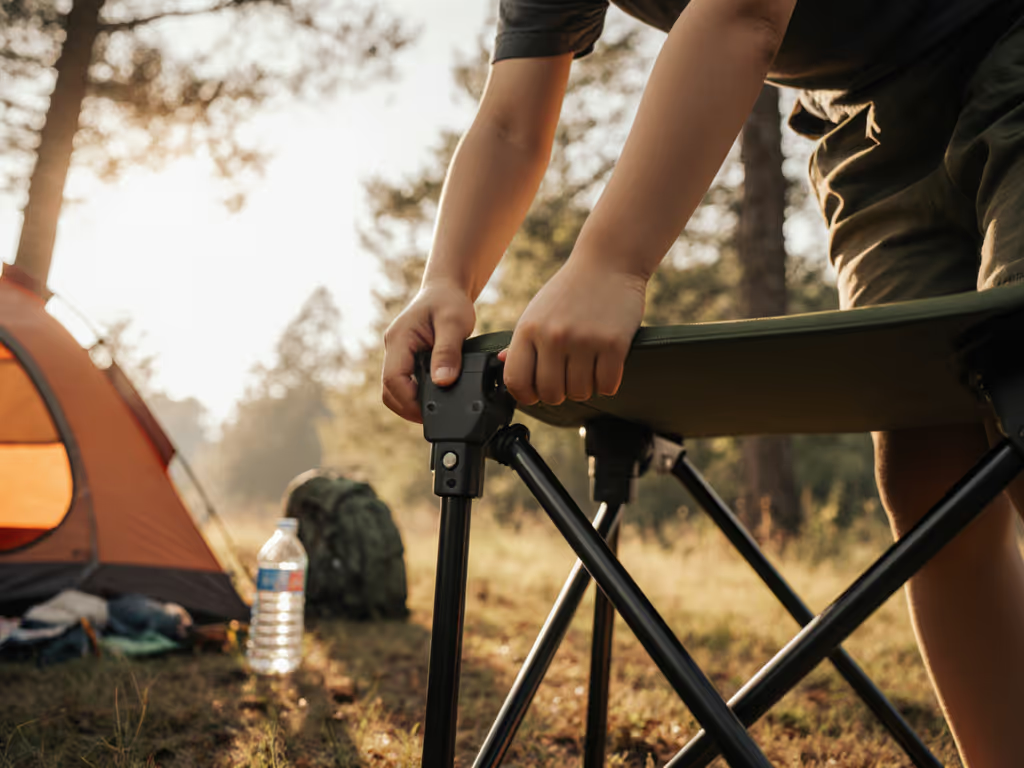
Don't wait until your child complains to address seating geometry. Follow this timeline for proactive adjustments:
- Six months before trip: Measure your child's seated knee height (heel to thigh)
- One month before trip: Test chair/table height alignment at home
- Day of setup: Make final micro-adjustments based on terrain
- Halfway through trip: Recheck alignment as ground conditions change
This systematic approach prevents the "why can't I settle?" frustration that breaks camp harmony. Use our data-driven chair-and-table checklist to record measurements and avoid mismatches on trip day. Remember, it's not about the chair alone, it's about how chair, table, and terrain interact to create comfortable long-sit experiences where conversation flows naturally.
Your Actionable Next Step
This week, measure your child sitting at your dining table at home. Note where their knees, hips, and elbows fall. If their feet don't touch the floor with knees bent at 90 degrees, calculate the difference between their ideal seat height and your current camping chair. For most families, this reveals a 1-3 inch gap that's easily closed with simple modifications before your next trip. Geometry over gimmicks isn't just a philosophy, it's the practical path to more connected family time around the camp menu. Start with one measurement, make one adjustment, and watch how those small geometric changes transform your camp's comfort and cohesion.
Related Articles