How to Choose Folding Camp Furniture for Real Comfort
By Diego Matsuura • 6th May
If you've ever arrived at a campsite after a two-hour drive and spent 45 minutes untangling folding chairs, only to find your knees banging the table edge, you know the stakes. Folding camp furniture and space-efficient camp setups are supposed to simplify basecamp life, yet mismatched heights, wobbly legs, and clumsy packing often turn them into the opposite. The good news: comfort isn't hiding in thicker cushions or fancier fabrics. It's built into geometry (the angles, heights, and proportions that let your body settle in without constant micro-adjustments). This guide answers the questions that trip captains and group planners actually ask, and shows how measurable design choices create the difference between 'we tolerated this meal' and 'let's stay for cards and stories.'
FAQ: Choosing Folding Camp Furniture That Works
Q: What makes folding camp furniture genuinely comfortable?
Comfort isn't about softness; it's about fit. When you sit at a table for a two-hour dinner, your comfort depends on three geometric truths: the distance from your hip to your knee (seat height), the angle of your back relative to your thigh (seatback angle), and the clearance between your knees and the table edge. A chair that's too low forces your knees upward, compressing your thighs and cutting blood flow. Too high, and your feet dangle, placing all your weight on the back of your legs (fine for 20 minutes, exhausting by hour two).
The same applies to table height. For table specifics, see our ergonomic camping tables guide. A standard dining table sits 30 inches tall; your elbows, when seated comfortably, should be approximately 10-12 inches above your lap. If the table is lower, you hunch. If it's higher, you reach and shoulder-tense. When these relationships are intentional and geometry works quietly in your favor, you can eat, play cards, or prep a meal without that restless 'I need to stand up' feeling that derails group flow.
Q: How do I match chair height to table height?
Start with your seated body. When sitting upright with your back against the chair and your feet flat on the ground, measure the distance from the floor to the top of your thigh. Most adults land between 16 and 18 inches; taller campers may reach 19 inches, and shorter adults might sit at 15 inches. This is your reference seat height.
Now, sit at your table and confirm that your elbows rest naturally with roughly a 90-degree bend in your arms. If your knees are jamming the underside of the table, you've found the problem: either the table is too low, the seat is too high, or both. With proper spacing, you should have 10-12 inches of clearance between your knee and the table edge.
Here's a practical test: bring your camping chair and a tape measure to a hardware store or café with a table similar to the one you plan to use. Sit for five minutes. If you're shifting, uncrossing your legs, or feeling pressure in your lower back or thighs, the geometry is fighting you. One successful transformative camping design scales this fit across ages and body types, so if your group includes both a 5'2" partner and a 6'3" friend, the table height and chair-clearance system must accommodate both without awkward wedges or pillows.
Q: Why does my furniture wobble, and how do I stop it?
Folding furniture on uneven ground is inevitable in camping. Sand gives way, rock creates divots, and soil settles unevenly. A table with narrow feet and a high center of gravity will teeter; a low, wide-footed stance will stay put even on a slope. We tested which designs actually stay put in our stability-tested folding tables roundup.
When evaluating folding camp furniture, check three things:
- Foot footprint: Wider feet (ideally at least 2-3 inches across) distribute weight and resist sinking into sand or soft soil.
- Leg angle and cross-bracing: Legs that splay outward (not vertical) create a more stable base. X-bracing or diagonal supports reduce wobble under load.
- Height-to-base ratio: A table that's 30 inches tall should have a base footprint of at least 36 inches between opposite feet. The lower the center of gravity relative to height, the more stable it is on uneven terrain.
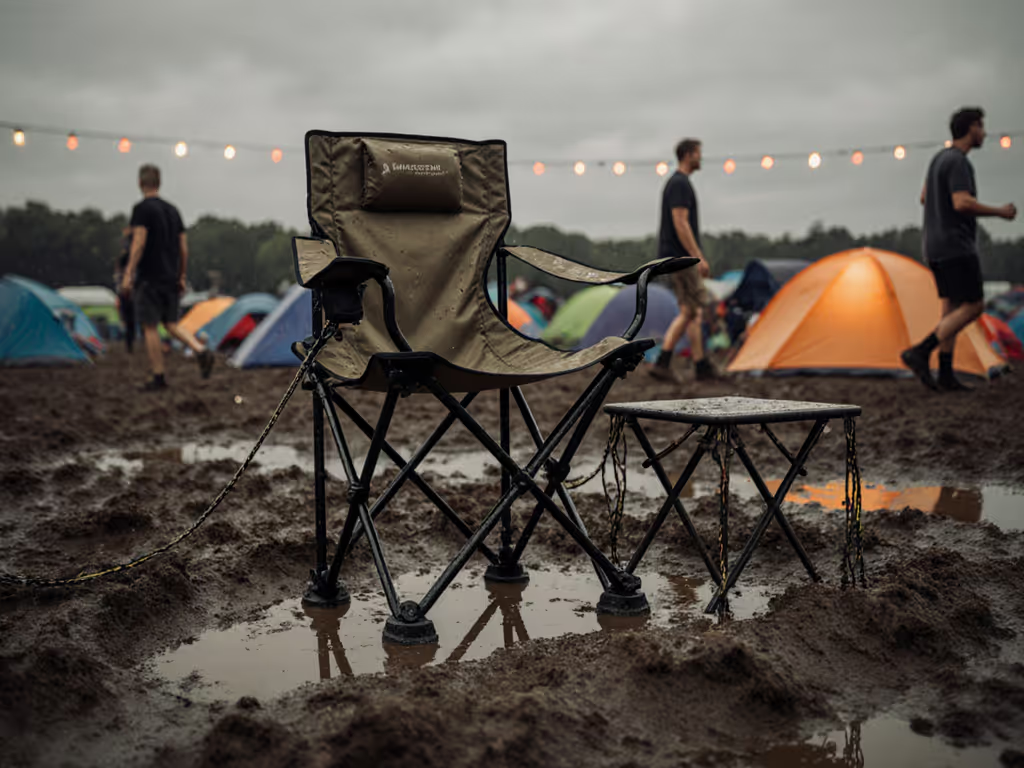
If legs sink (say, in wet sand or mud), add sand plates (wide, flat bases that screw onto chair feet) or use a folded tarp underneath to spread the load. This small adjustment prevents that sinking-chair frustration where you slowly descend through the meal.
Q: How do I pack everything efficiently without sacrificing comfort?
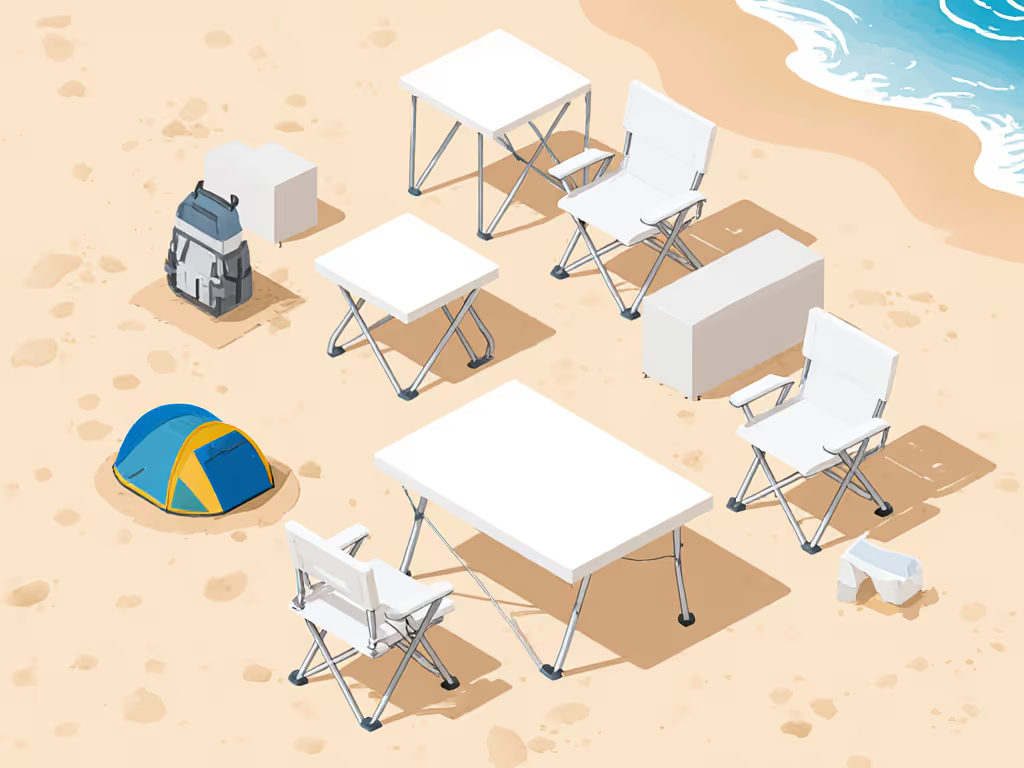
Dual-purpose outdoor gear and gear consolidation techniques start with nested, flat-pack designs. Measure your vehicle's cargo volume (the space between the back seat and liftgate) before you buy. If space is tight, start with these space-saving camp furniture solutions. A 2-foot by 2-foot by 6-inch folding table packs neatly; a bulky frame chair with fixed legs takes twice the footprint.
Look for furniture that stacks or nests: tables that fold into thirds, chairs that collapse nearly flat, and benches that double as storage. Some vendors offer modular systems where seating and table frames share compatible connectors, meaning you buy fewer unique pieces and organize them in a single consolidated case. A good rule: your core furniture (chairs, tables, cots) should occupy no more than 60% of your cargo volume, leaving room for a cooler, water containers, and prep surfaces.
Q: Can I scale the setup for extra guests without chaos?
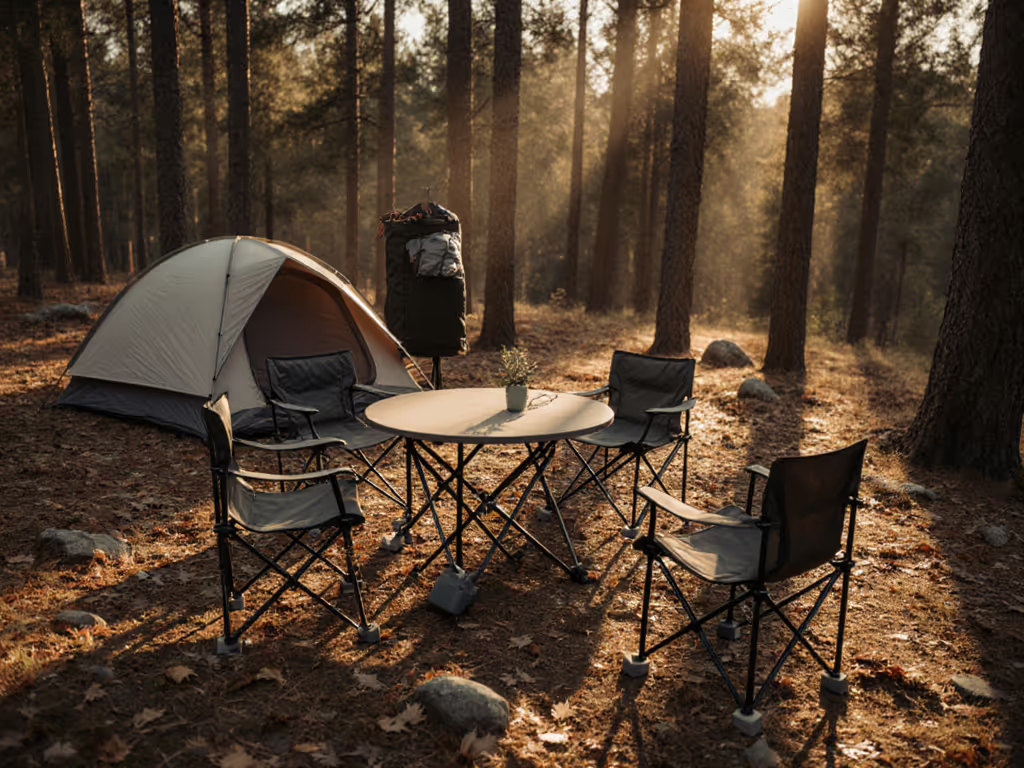
Yes, if you plan for it. Modular systems with add-on leaves, auxiliary side tables, and clip-on connectors make it easy to swap a 4-person table for a 6-person configuration. Test this at home: set up your core furniture, then add one extra chair and a side table. Can you do it in under five minutes? Can you still move around the camp without tripping? If yes, you've got scalability.
The key is consistency: all chairs should be the same height so the line of sight and posture remain uniform around the table. If you're cobbling together borrowed folding chairs of different heights, your group will experience a staggered sight-line and disjointed comfort: one person's knees touch the table, another's legs dangle, and the geometric harmony breaks.
Q: What materials and finishes actually last through a season of camping?
Look for aluminum frames (lightweight, non-corroding), stainless-steel hardware, and fabrics rated UV-resistant and quick-dry. Avoid powder-coated steel if you'll camp in salty or humid climates; it chips and rusts. Check weight ratings (not just the weight capacity per seat, but the frame strength under repeated fold cycles). The best camp furniture pieces will show their weight limit and cycle rating in the spec sheet.
Q: How fast can I really set up?
If setup takes longer than 10-15 minutes, your furniture design is working against you. Folding furniture should snap or clip together with no tools or a single Allen wrench. Legs should lock automatically or with a simple lever. Tables should unfold flat without needing height adjustment or leg tightening.
Before buying, time the setup in the store or watch a real-time video online. If the instructions are unclear or the process feels fiddly, that's friction you'll feel every arrival and departure. Geometry over gimmicks applies here too: a simple, proven frame design with clear connection points beats clever hinges that save half a pound but add five minutes to assembly.
Your Next Move
Choosing folding camp furniture comes down to one principle: comfort is geometry working quietly in your favor. Before you add anything to your cart, measure your group's seated bodies, test the height-to-table relationship, and verify that the pack volume fits your vehicle. Visit a store or borrow a friend's setup for a trial run if possible (10 minutes of hands-on testing reveals far more than reviews).
Then, make a loadout map. Sketch your campsite zones (lounge, dining, kitchen prep) and outline which piece serves each function. For layout ideas that use what you already own, see our campsite zoning guide. If you're buying modular, label your storage cases to match zones (everything is where you need it when you arrive). This small upfront work transforms camp from a pile of gear into an intentional, cohesive living space. The result: meals that flow, conversations that linger, and a team that feels prepared, not cobbled together.
Related Articles