Best Camp Furniture for Music Festivals
By Koen van der Meer • 4th Apr
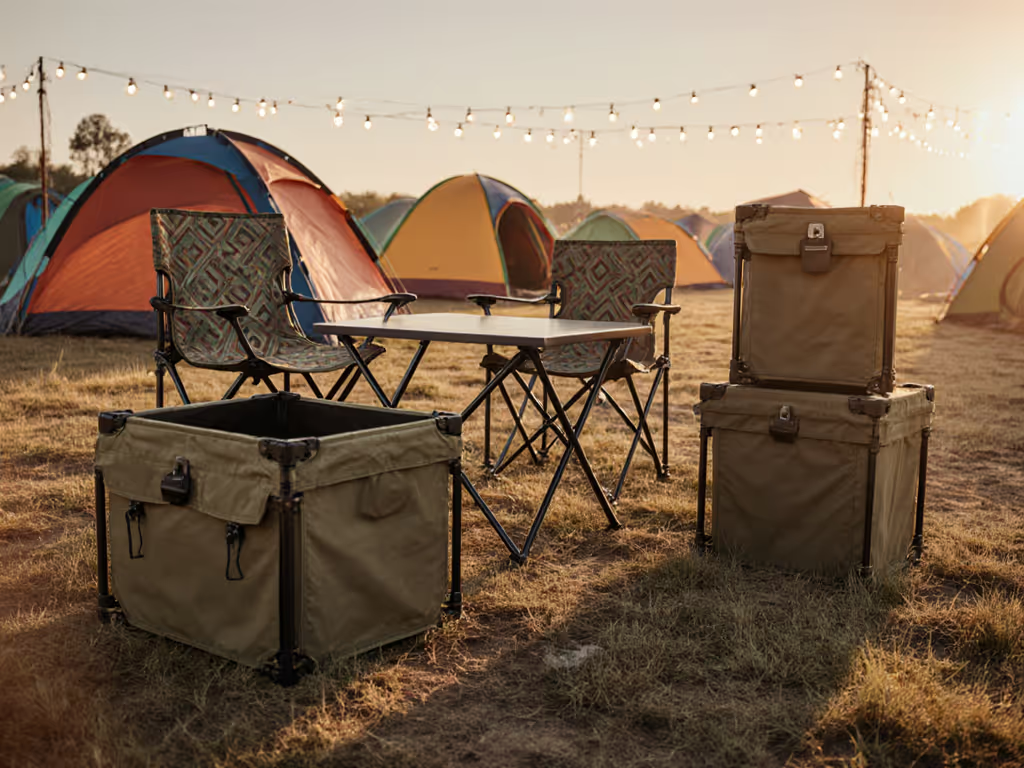
When you're setting up camp at a festival (dust flying, limited light, the clock ticking before gates close), the furniture you choose determines whether your group spends the weekend comfortable and together, or scattered across uncomfortable perches and tangled tents. Best camp furniture for music festivals isn't about ultralight minimalism or Instagram aesthetics; it's about reliability under constraint. I outfit basecamp zones for exposed conditions and unpredictable crowds, and I've learned that a festival site (often dusty, crowded, and windy) demands furniture built for failure modes, not brochure claims.
This guide walks you through the decisions that matter: seat height alignment, pack volume, stability on soft ground, and modular scaling for shifting group sizes. I'll show you how to evaluate options through the lens of actual festival conditions, not comfortable meadow assumptions. For product picks tailored to crowded event sites, see our festival-proof lockable camp furniture.
Why Festival Furniture Is Different from Casual Backyard Setups
Q: How is festival camping different from home-in-the-backyard camping?
Festival sites present a cascade of specific stressors. The ground is often unprepared (think churned grass, compacted dust, or shallow sand). Wind funnels through tent rows. Moisture settles heavily overnight and into early morning. Crowds mean accidental bumps and wobbly tables close to foot traffic. Setup windows are compressed; you arrive mid-afternoon, park 300 meters away, and must deploy a functional lounge and eating zone before dusk. And crucially, festivals mix group compositions: your core crew of four might absorb six newcomers midweek, forcing rapid scaling.
Home camping often forgoes weight and pack volume; festivals demand compact nested designs and predictable footprints. You cannot afford a chair that sprawls 36 inches wide when trunk space is rationed. You cannot afford a table that sinks into wet grass by evening; it'll invite mold, create drainage puddles, and compromise stability for drinks and plates.
The practical constraint is this: portable festival seating must balance comfort (you're sitting 12-16 hours a day) with pack efficiency (you share trunk space with tent, cooler, stove, and four other people's gear).
What Seat Height Matters, and Why It Breaks Most Festival Camps
Q: Why do people complain about mismatched seat and table heights at festivals?
Mismatched heights create ergonomic failure from the first meal. Imagine a camping chair at 15 inches seat height paired with a 28-inch table. Your knees jam against the tabletop, or your elbows sit uncomfortably high, forcing slouching over plates. Over a weekend of eating, chatting, and card games (often 3-4 hours cumulative), poor posture triggers back ache, shoulder strain, and fatigue that dampens mood.
Festival groups often inherit hand-me-down chairs at random heights (16, 18, 21 inches). Add a table that wasn't spec'd to match, and you've created an ergonomic disaster. Industry data suggests that consistent 17-19 inch seat height aligns well with 28-30 inch table height for comfortable dining posture. For height-matching tables and posture tips, see our ergonomic camping tables guide. Most festival campers buy chairs without reference to their table height, compounding the problem.
The solution: measure before you pack. If your table is 29 inches tall (a standard camp table height), choose chairs with a seat height of 18-19 inches. This ensures knees rest 10-11 inches below the table surface, the comfort zone for eating and gaming without strain. For lounge areas (no table interaction), 15-17 inch heights are acceptable, but don't mix loungers and dining chairs without intent.
Stability on Uneven Festival Ground: Feet, Footprints, and Anchoring
Q: What causes tables and chairs to wobble, and how do I prevent it?
Wobbly furniture is a cardinal failure at festivals. Causes:
- Uneven compacted soil or grass: most festival sites have depressions, mole runs, or foot traffic ruts. A four-legged chair with point feet will teeter on any depression.
- Sand or very soft ground: legs sink unevenly as weight shifts and people stand/sit repeatedly.
- Wind load: even moderate wind (12-18 mph) applies lateral pressure to table surfaces and chair backs, rocking a lightweight frame.
- High center of mass: tall camp chairs (22+ inches) magnify teeter when one leg lifts off the ground.
Mitigation strategies:
-
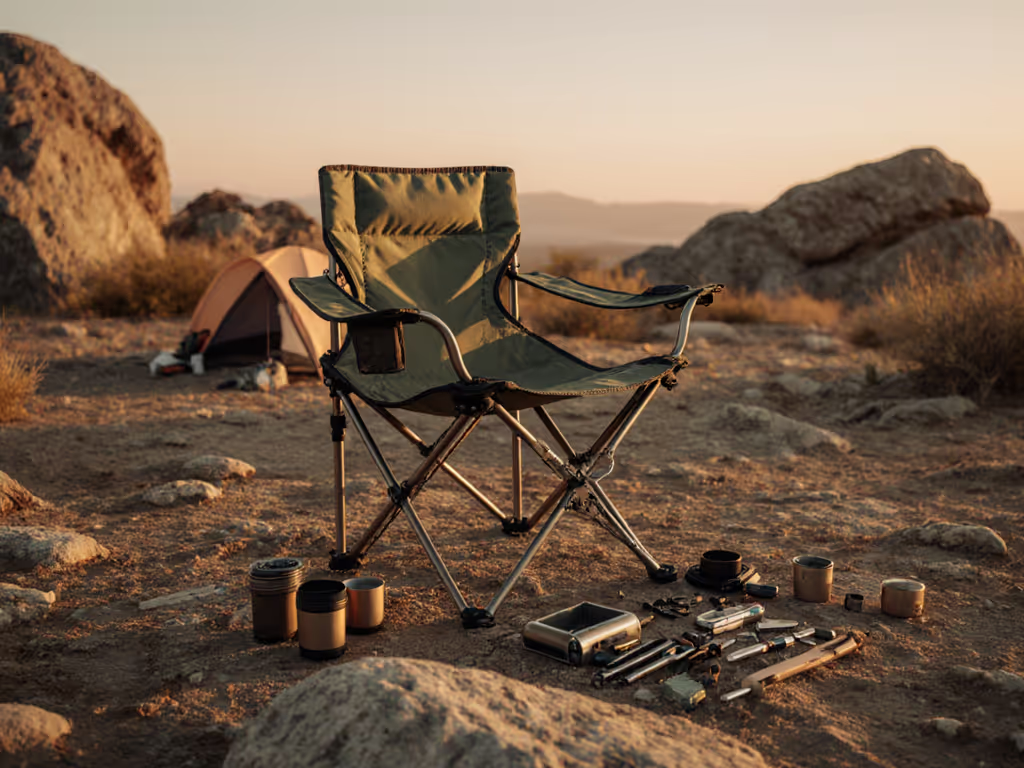
Wider feet or larger footprints: tables with feet >= 4 inches wide or chairs with spread legs (30+ inches apart) distribute load and resist single-point sinking. The ALPS Mountaineering King Kong chair (mentioned in reviews as a top overall choice) uses a wide stance and heavier-gauge frame, making it inherently more stable than narrow-legged competitors.
-
Adjustable or leveling legs: some tables and chairs include twist-adjust feet or leveling screws; these allow you to compensate for <= 2 inches of ground tilt. This is worth the ounce or two of added weight.
-
Cross-bracing and external guy lines: a table or lounge platform with diagonal bracing (either frame-integrated or added via cord/stakes) resists rocking and wind sway. Anchor points on the frame allow you to stake the structure to the ground via deadmen (buried anchors) or pegs.
-
Lower center of mass: a chair or table kept lower is inherently more stable. Festival chairs in the 15-18 inch height range are more resistant to tipping than taller loungers.
Spec for the wind you'll face, not the weather app. Festivals forecast 8 mph winds; afternoon thermals and funneling through tent rows create sustained 15-20 mph gusts. Plan for the gust, not the average.
Compact Packing and Nested Design: The Tetris Problem
Q: How do I fit furniture, cooler, water, and stove into a compact SUV or van?
Most festival campers arrive with a compact SUV or minivan. Usable cargo volume after tent and cooler is roughly 15-25 cubic feet. Furniture often dominates this space.
Pack volume math: A standard camping chair (open, not folded) is roughly 8-10 cubic inches. Folded, a good chair nests into a rectangle about 6" × 4" × 32", or roughly 0.67 cubic feet. A large camp table (48" × 28") folded is 1.2-1.5 cubic feet. Add side tables, cots, organizers, and you're at 8-12 cubic feet of furniture alone, nearly 50% of your trunk.
Solutions:
- Nested and stackable designs: chairs that fold flat and slide into a single bag; tables with removable legs and foldable surfaces that stack to 4-5 inches thick.
- Inflatable or roll-flat alternatives: some lightweight tables and stools compress to negligible volume, though at a premium price.
- Combo pieces: a stool that doubles as a side table or a lounger that converts to a dining height eliminates redundancy.
- Allocate a bin: designate one plastic storage tote (27" × 18" × 12") as your "camp furniture" bin; choose pieces that fit together within that footprint. This forces modularity and creates a pack boundary.
Budget-conscious alternatives like the Cascade Mountain Tech Low Profile chair or Kijaro Dual Lock folding chair (both highlighted in reviews as strong budget picks) offer compact fold profiles and are available at accessible price points. The trade-off is that cheaper frames sometimes have looser hinges or uneven leg spacing after multiple pack cycles; inspect folds after 3-4 trips.
Good Camp Chairs for Festivals: Comfort, Durability, and Use-Case Fit
Q: What makes a "good" festival camp chair, and what should I actually compare?
A good festival chair balances five criteria:
1. Seat Height and Posture Support
Look for 17-19 inch seat heights for dining scenarios, 15-17 inches for lounge-only setups. Backrest angle matters: fully reclined (>120°) is comfortable for fireside lounging but hopeless for eating; upright or slight lean (90-110°) is best for games and socializing. Lumbar support (a slight curve in the backrest) prevents back ache over 4+ hours of sitting.
2. Weight Capacity and Frame Quality
Most camp chairs are rated for 250-350 lbs. If your group includes larger individuals or if the chair will carry occasional load (person + bag of firewood), verify the rating. Look for aluminum or steel frames (aluminum is lighter, steel is stiffer); avoid chairs with plastic hinges or riveted joints that fail after 30-40 fold cycles.
The ALPS Mountaineering King Kong, for instance, is frequently cited as a top overall choice due to robust construction and comfortable seat height, and is often priced around $48-$80 depending on retailer. It offers a tested weight capacity and a footprint wide enough for stability on uneven ground.
3. Storage and Side Table Compatibility
A chair with deep side pockets or cup holders adds utility. At a festival, you'll need somewhere for a phone, headlamp, sunscreen, and a drink. Chairs without pockets force you to set items on the ground, risking spills or loss. Some chairs (notably the Yeti Trailhead, noted by reviewers as exceptionally comfortable) include a full side shelf or integrated table surface.
4. Footprint and Stability
Measure the seat width and leg spread. A seat wider than 24 inches or with legs spread >= 28 inches apart resists tipping and accommodates larger users. On soft ground, wider feet (> 3 inches) prevent sinking. Avoid chairs with thin aluminum legs and point feet; they'll wobble immediately on irregular ground.
5. Material Durability and Cleanability
Festival ground is dusty, muddy, or damp. Fabric should resist staining and dry quickly (polyester or solution-dyed fabrics are better than cotton). Metal frames should be powder-coated steel or anodized aluminum to resist corrosion. Avoid chairs with exposed wood or uncoated aluminum; they'll oxidize and degrade.
Secure Festival Gear Storage: Tables with Shelves and Organizers
Q: Where do I put small items, and how do I prevent overnight dew damage?
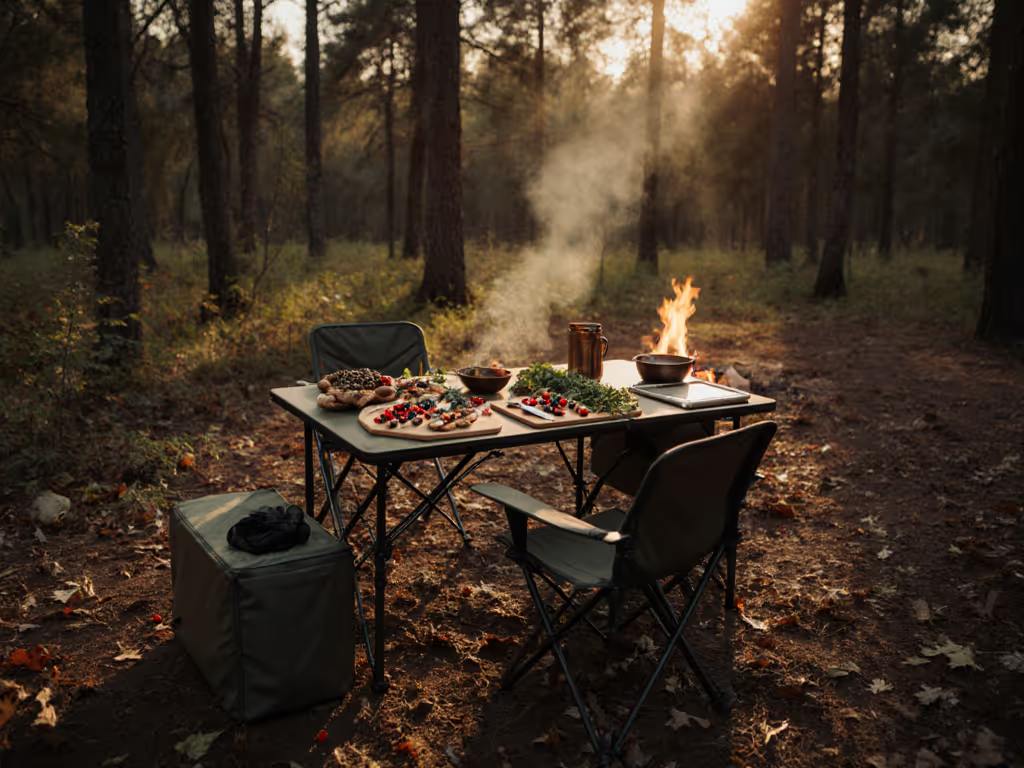
Secure festival gear storage means more than a table; it requires elevation and organization. Items stored directly on damp ground (sunscreen, sunglasses, medications, charging cables) will be wet by morning. A table with a lower shelf (12-18 inches above ground) provides elevation while keeping items accessible. Open-frame tables are better than fully enclosed designs, as they allow air circulation and are less prone to condensation trapping. For festival-ready pieces with integrated stash space, browse our camp furniture with storage.
Side tables (20-24" tall, 16-20" wide) are particularly useful: place one next to the lounge zone for phones and headlamps, another at the kitchen area for spices and utensils. Look for tables with integrated hooks for hanging towels, headlamps, or bags.
Organization strategy:
- Zone-based bins: label three totes, "lounge," "kitchen," "morning." Lounge items (blankets, games, sunscreen) stay in the lounge bin. Kitchen items (utensils, spices, foil) in the kitchen bin. Morning items (headlamps, coffee, toiletries) in the morning bin. This mapping eliminates searching and accelerates setup/teardown.
- Weatherproof containers: use bins with fitted lids; plastic storage totes (27" × 18" × 12") nest and stack, and keep contents dry.
- Hanging systems: small stuff sacks or organizers clipped to a loop or tent pole keep items at eye level and free up table space.
On-site wind management is critical: secure bins with bungee cords if wind is forecast, and ensure tables are staked or weighted (water jugs at the base work well) to prevent tables tipping and scattering contents.
Compact Festival Setups for Small Groups: Scalable Modular Configurations
Q: I'm bringing 4-6 people but might add 2-3 more mid-trip. How do I design furniture to adapt?
Modular scalability is the mark of a mature festival camp. Here's how:
Core Configuration (4 People)
- Seating: 4 dining chairs (17-19" seat height) arranged around a table.
- Table: one 48" × 28" folding camp table.
- Lounge: 1-2 lightweight loungers (15" seat height) off to one side for wind-down.
- Shelving: one side table for kitchen, one for personal items.
Pack volume: ~4 cubic feet (chairs + table + loungers + side tables). Setup time: 8 minutes.
Scale to 6-8 People
- Add 2 dining chairs (increases seating to 6).
- Add a second 36" × 24" side table as a leaf/extension next to the main table, or as a separate food prep surface.
- Add 1-2 folding stools (lightweight, 14" height) for overflow seating or as footrests.
Pack volume: +1.5 cubic feet. Setup time: +3 minutes (arrange new chairs, unfold leaf).
Emergency Scale to 10+ People
- Remove 1 lounger (traded for seating efficiency).
- Add a third side table for drinks/staging.
- Arrange chairs in two groups (6 around main table, 4 in a secondary lounge cluster) rather than forcing all around one table.
This modular approach requires that all chairs share the same seat height, and that tables are compatible heights. If you buy a mismatched jumble, scaling becomes chaos.
Stability is a comfort multiplier. A group feels cohesive and grounded when the furniture doesn't wobble, when everything fits, and when nobody struggles to stand up or reach the table.
Festival Comfort Essentials: What Actually Reduces Fatigue
Q: What differentiates a comfortable festival weekend from a painful one?
Comfort is cumulative. Over 60+ hours at a festival, small ergonomic wins compound:
-
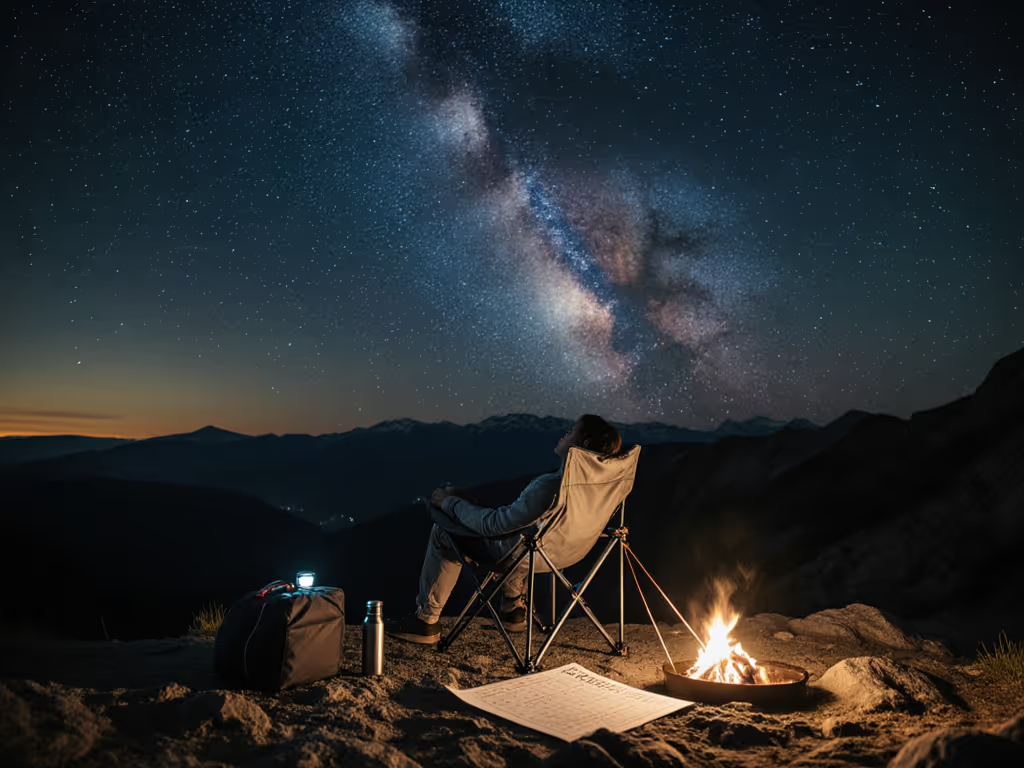
Lumbar support in lounge chairs: even a subtle curve in the backrest prevents lower back ache from prolonged sitting. Loungers with zero lumbar support feel restful for 30 minutes, then ache sets in.
-
Firm seat cushioning: thin nylon over aluminum feels cheap and provides no shock absorption; thick foam or high-density cushioning absorbs impact and distributes pressure. A well-cushioned chair feels supportive even after 6 hours of sitting.
-
Armrests and side tables: having a surface to rest your arm or lean something against reduces muscle tension in shoulders and neck. Chairs without armrests or nearby tables force you to hold tension for long periods.
-
Adequate seat depth: a seat that is too shallow (shallow cushion) or too deep (knees buckle at the edge) creates discomfort. Standard is 16-18 inches from backrest to front edge; this suits most adults.
-
Higher seat height for older or taller users: campers over 6 feet or those with mobility issues struggle with 14-15 inch seats. Offering 1-2 chairs at 20-22 inches accommodates these users and prevents them from opting out of meals or games.
-
Shade and weather protection: a pop-up canopy or tarp over the lounge zone reduces sun exposure and keeps dew off overnight. Comfortable doesn't exist if you're sunburned or shivering.
Comparing Festival Furniture Options: Key Metrics and Trade-Offs
Q: How do I actually decide between options when there are so many brands?
Here's a transparent comparison framework, grounded in the data from credible testing sources:
Tier 1: Best All-Around Value
ALPS Mountaineering King Kong Chair (~$48-$80)
- Seat height: 18 inches (dining-friendly).
- Footprint: 28" wide, stable stance.
- Pack volume: ~0.7 cubic feet.
- Weight capacity: 300 lbs.
- Cushioning: moderate-density foam.
- Features: cup holder, side pocket, aluminum frame, durable nylon.
- Verdict: Frequently recommended as a top overall choice across multiple testing sources; offers solid ergonomics, proven durability, and reasonable price. The wide stance and moderate seat height make it versatile for both dining and lounge contexts. Suitable for festival groups aged 25-65.
Tier 2: Budget-Conscious Options
Kijaro Dual Lock Folding Chair (~$40-$55)
- Seat height: 18 inches (upright, anti-slouch design).
- Footprint: compact, 25" wide.
- Pack volume: ~0.6 cubic feet.
- Weight capacity: 250 lbs.
- Cushioning: thin nylon over aluminum.
- Features: two-position reclining, dual locking mechanism (stable at recline).
- Verdict: Strong for dining contexts (upright posture); the locking mechanism adds confidence. Less cushioning than premium chairs, so longer sessions may cause minor discomfort. Good for groups focused on games and eating rather than extended lounging.
Cascade Mountain Tech Low Profile Chair (~$25-$35)
- Seat height: 14 inches (low-slung lounge style).
- Footprint: 28" wide.
- Pack volume: ~0.65 cubic feet.
- Weight capacity: 225 lbs.
- Cushioning: minimal; thin fabric over frame.
- Features: very lightweight, basic cup holder.
- Verdict: Budget pick, but trade-off is thin cushioning and low height (not dining-appropriate). Use for lounge-only zones; buy 4-5 total as a fleet to absorb occasional failures.
Tier 3: Premium Comfort and Durability
Yeti Trailhead (~$120-$160)
- Seat height: 18 inches.
- Footprint: 30" wide, generous and stable.
- Pack volume: ~0.9 cubic feet.
- Weight capacity: 300+ lbs.
- Cushioning: high-density foam, premium nylon.
- Features: full side table/shelf, integrated storage, aluminum frame, exceptional durability.
- Verdict: Top-tier comfort; one tester noted it as "more comfortable than my office chair." Justified for groups planning multi-day festivals annually. Higher initial cost, but resale value and longevity offset. Ideal for older or mobility-conscious users.
Tier 4: Ultralight and Minimal Packspace
Helinox Chair Zero or REI Co-op Flexlite Air (~$80-$150)
- Seat height: 14-16 inches (lounge-focused).
- Footprint: 21-24" wide (very compact).
- Pack volume: 0.3-0.4 cubic feet (nests into a small bag).
- Weight capacity: 265 lbs.
- Cushioning: minimal; direct-to-fabric design.
- Features: ultralight aluminum, premium materials, minimal bulk.
- Verdict: Ideal for car camping with extreme space constraints (compact sedan, van with tight layout) or multi-car caravans where shared furniture is impractical. Trade-off is that minimal cushioning makes extended lounging less restful, and the low height is unsuitable for dining. Better for younger, more flexible campers; less suitable for 55+ groups.
Wind-Smart Setups and Anchoring Strategies for Exposed Festival Sites
Q: What happens when wind picks up, and how do I prevent the entire camp from becoming a debris field?
Festivals on open ground (fields, parking-lot expansions) offer zero windbreak. When afternoon thermals arrive or a weather system moves through, wind gusts hit unprepared camps hard.
I've seen a neighbor's unsecured table cartwheeled in a sudden katabatic blast (chairs tipped, drinks scattered, the evening disrupted). Our setup stayed because we'd swapped standard feet for rock plates (when needed), cross-braced the table rails, and staked guy lines to deadmen buried in the ground. Dinner continued, conversations unbroken. That hour taught me: build for the site you have, not the brochure's meadow. For severe weather prep, follow our storm anchoring guide.
Wind mitigation:
-
Foot options: Replace pointed feet with 4-6 inch-wide plates or sand feet (flat rectangles that distribute weight and resist sinking). Some tables offer swap-able feet; others you'll tape or fabricate.
-
Cross-bracing: add diagonal bracing (rope, webbing, or rigid struts) between table legs to resist lateral rocking. Even simple X-bracing reduces wobble by 60-80%.
-
Anchoring and deadmen: drive stakes or screw-anchors through table legs into the ground, or clip lines to buried "deadmen" (a heavy board or bag of sand buried 12" deep). Anchor tables at three points minimum; chairs at two (if they'll be sat in continuously).
-
Weight at base: place full water jugs or sandbags at table legs to lower center of mass and add resistance to tipping.
-
Wind-resistant accessories: secure tablecloths with clips, use weighted napkin holders, and keep lightweight items (plates, utensils) corralled in bins or on the lower shelf. Avoid leaving cups unattended at table edges.
-
Layout: position tables and loungers perpendicular to prevailing wind when possible, so wind pressure hits the narrow end rather than the broadside.
-
Check forecasts obsessively: festival forecasts are often wrong. Check local weather stations 3 days before, again the morning of arrival, and monitor wind alerts. Adjust camp layout and anchoring based on gust-speed forecasts, not average wind speeds.
Festival Comfort Essentials: The Full-Integrated System
Q: What does a complete, well-designed festival furniture system look like, end-to-end?
Here's a practical loadout for a 6-person group, weekend festival (Fri-Sun):
Dining/Gathering Zone
- Table: one 48" × 28" camp table (nest-folds to 3" thick). Footprint when set up: 48" × 28" × 30" tall. Pack volume: 1.2 cubic feet.
- Chairs: four 18"-height dining chairs (e.g., ALPS King Kong or Kijaro Dual Lock). Individual pack volume: 0.7 cu ft × 4 = 2.8 cubic feet.
- Side table: one 24" × 18" folding side table (lower shelf for kitchen items). Pack volume: 0.5 cubic feet.
Total pack volume: 4.5 cubic feet. Setup time: 12 minutes.
Ergonomic check: 18" chairs + 30" table = 12" clearance below table surface. Comfortable for eating and card games. Legs don't jam; elbows rest at natural height.
Lounge Zone
- Loungers: two 15"-height recliners (e.g., Cascade Mountain Tech or ALPS King Kong set to recline). Pack volume: ~1.4 cubic feet.
- Side table: one 20" × 16" accent table. Pack volume: 0.4 cubic feet.
Total pack volume: 1.8 cubic feet. Setup time: 5 minutes.
Windbreak and shade: pop-up canopy (10' × 10', separate) anchored over lounge zone.
Overflow and Flexibility
- Stools or low loungers: two lightweight folding stools (14" height, collapsible). Pack volume: 0.6 cubic feet. Deploy as footrests or emergency seating.
Total System Summary
- Total pack volume: ~7 cubic feet of furniture.
- Typical trunk allocation: ~35 cubic feet for tent + cooler + stove + water = leaves ~15 cubic feet for furniture, bins, and personal gear. This loadout fits comfortably.
- Setup and teardown: 20 minutes to deploy fully anchored and organized; 15 minutes to pack down and bin.
- Weather robustness: tables and chairs are staked or weighted; all items have a home in a labeled bin; loungers are sheltered under canopy.
- Comfort scope: dining is ergonomic for 6+ hours; lounge is restful for fireside; all users aged 18-70 can sit comfortably without strain.
Final Verdict: Your Festival Furniture Strategy
Q: How do I know I've made the right choice and built a system that will actually work?
Start by auditing your actual constraints:
- Vehicle and trunk space: measure your usable cargo volume (subtract tent, cooler, water).
- Group size and composition: how many people, and what age range? Do you need higher seats for older users?
- Site type: festival on open field (wind-exposed), or in a forest clearing (wind-sheltered)? Plan anchoring accordingly.
- Comfort duration: are you eating meals for 1 hour or playing cards for 6 hours? Invest in cushioning and lumbar support if long sessions are planned.
- Budget ceiling: premium chairs ($100-$160) last 8-10 years; budget chairs ($30-$50) last 3-4 years. Calculate cost per trip, not upfront cost.
Recommended starting loadout for most 4-6 person festival groups:
- Core: 4-5 ALPS Mountaineering King Kong chairs (proven balance of comfort, durability, and price; seat height works for dining and light lounging).
- Table: one 48" × 28" camp table with adjustable legs (to level on uneven ground).
- Side surfaces: one to two folding side tables (kitchen zone, lounge zone).
- Anchoring kit: guy lines, stakes, sandbags or water jugs for weighting, rope for cross-bracing.
- Organization: three labeled storage totes for modular packing.
- Canopy (optional but highly recommended): 10' × 10' pop-up canopy for shade and weather shelter.
Total investment: $400-$600 for new gear; $800-$1,200 if adding a quality canopy.
Payoff: Every festival weekend for the next 3-5 years, your group deploys a functional, comfortable camproom in 20 minutes. Wind gusts don't scatter drinks. Meals are ergonomic. Newer group members arrive to a setup that feels intentional and inviting, elevating the whole experience. You spend less time fussing with gear and more time together.
That's not just comfort. That's the system working.
Your next step: measure your table height, identify your group's seat-height needs, and cross-reference one of the chair options above. Verify pack volume by calculating nested dimensions. Then allocate one weekend trip as a shakedown cruise, deploy everything, test stability on actual ground, time setup, and identify any gaps. Adjust before the festival season hits.
Build for the site you have. Anchor for the wind you'll face. Choose pieces that work together, not against each other. Your future self (and your group) will thank you.
Related Articles